Great initiative, it is fairly close to the Sharia conference I have been planning, indeed, I had sent the initial plan to Imam Mujahid along with a large group of Muslims leadership in the US. Glad to see this coming through. Together, we can reach out and allay the Sharia Phobia among the right wing Americans, and hope to assure the Moderate Americans, the majority that the Sharia law portrayed by them does exist in 3 out of the 56 Muslim Majority nations, but will never make it among Muslims living in other nations, and certainly not in America. Muslim Americans are not asking or want that part of the mis-applied Sharia. Please refer to the article on the left panel.
Mike Ghouse
Muslims Together working for a cohesive America
----------------------
Hate against Muslims is becoming lethal.
The Norway terrorist Anders Breivik, who killed 77 people, was influenced by American anti-Sharia Islamophobes. He said that he was killing to stop a Sharia takeover.
Breivik’s brand of hatred is based on intentional ignorance. The same ignorance is represented in the 49 bills in 25 states calling for a Sharia ban. Now a number of U.S. presidential hopefuls are calling for a federal Sharia ban.
The major source of this ignorance and hate is the internet. Just Google the word “Sharia” and see the search results in images, videos, and articles. This is what the Norway terrorist quotes and this is what anti-Sharia lawmakers cite.
We Muslims must tell our story.
Practicing Islam is practicing Sharia. Our month-long fasting, our prayers, eating Halal and serving our communities are all Sharia. But that is not what our neighbors know.Banning Sharia affects you and I in concrete ways. These bills will prevent Muslims from being able to marry, divorce, inherit, bequeath, and finance according to Sharia.
We cannot allow the criminalization of our faith, or for that matter, any faith in our country. Freedom from state interference in religious practice is one of the cornerstones of our nation. Anti-Sharia bills do just the opposite.
This ignorance will not die if we remain silent. It is crucial that we urgently provide accurate information about Sharia. Even those who oppose these bills are searching desperately for more information. Abraham Foxman, National Director of the ADL, says that “People don’t know what Sharia means…”
Sound Vision is developing fresh information on Sharia to answer the critical questions the public has on the topic. We plan to put this material on Sharia101.org, to be launched this fall and updated regularly thereafter insha Allah.
Alhamdu lillah, so far we have written about 100 articles on Sharia, and filmed professors from Harvard, Columbia, Duke, and other universities on different aspects of Sharia, Jewish and Catholic laws, and freedom of religion in our country.
However, a great amount of work still needs to be done. We need to retain more scholars, producers, and SEO experts. Sharia 101 requires retaining top-notch experts who must be compensated for their time and effort.
Sound Vision has been serving the community for the last 23 years by producing high quality Islamic information for Muslims and non-Muslims. This is our area of expertise.
Please support this initiative during this blessed month of Ramadan through your Zakat and Sadaqa. I urge you to consider giving $40, $80, $500, $1,000, $2,500, $5,000 or whatever you can for the sake of our Deen.Your donations are Zakat-eligible and tax-deductible.
Donations are needed now to develop the content of our project before the presidential campaign, in which a federal ban of Sharia is likely to be proposed.
We need to raise $480,000 for this project. So far we have raised $120,000. With Allah’s blessings and your support we will insha Allah be able to assist our neighbors to understand Muslim perspectives on Sharia so that ignorance can no longer be used as a weapon by hate-mongers to kill, attack our Masjids, or criminalize the practice of Islam.
Thank you.
May Allah reward you for your generosity.
Wassalam,
Abdul Malik Mujahid
President
P.S. Sound Vision is a tax deductible not for profit 501 (C) 3 organization. You can learn more about our Sharia101 project here. p.s.s. We have already produced three brochures for non-Muslims about Sharia. Please feel free to call to get copies for your friends or Masjids at 1-800-432-4262
Sharia Resources Available Now
These three brochures are available now for our neighbors providing some aspects of Muslims perspectives on the Sharia debate. Order printed copies here, here, and here or Download free from the links below:
Sharia American Muslims
http://sharia101.yolasite.com/resources/The%20Sharia%20Muslim%20Americans%20Live.pdf
Prophet Honored by Supreme Court
http://sharia101.yolasite.com/resources/Prophet%20honored%20by%20Supreme%20Court.pdf
Sharia and Freedom of Religion
http://sharia101.yolasite.com/resources/Sharia%20and%20the%20Freedom%20of%20Religion.pdf
Sharia 101
http://www.soundvision.com/info/shariah/shariah101.asp
What you can do against the anti-Sharia bills today!
http://www.soundvision.com/info/shariah/what-you-and-your-family-can-do-for-sharia.asp
What your Masjid can do?
http://www.soundvision.com/info/shariah/what-masjids-can-do-to-defend-sharia.asp
What your interfaith partners can do?
http://www.soundvision.com/info/shariah/what-interfaith-partners-can-do-for-sharia.asp
Volunteers for the project
http://shariavolunteers.surveyconsole.com/
Sharia project
http://www.soundvision.com/info/shariah/shariah101.asp

Friday, August 26, 2011


Shari'a and Western Compliance
Article 22 of the 1990 Cairo Declaration on Human Rights in Islam states:
- Everyone shall have the right to express his opinion freely in such manner as would not be contrary to the principles of the Shari'a
- Everyone shall have the right to advocate what is right, and propagate what is good, and warn against what is wrong and evil according to the norms of Islamic Shari'a.
This declaration - made by the Organization of the Islamic Conference (OIC) and intended as an counter measure to the UN's 1948 Universal Declaration of Human Rights - exposes the slippery slope on which Western societies tread when indulging Shari'a-based interpretations of rights and freedoms. If every such right and freedom is bounded by religious edict, then no such rights and freedoms will exist.
Accommodation without limit is in effect enslaving supplication. Any parent with a wayward histrionic child will know that. Churchill knew it. Even Roosevelt knew it. Certainly Lincoln and JFK knew it. Do our leaders (politicians, intellectuals and clergy) know it?

Apparently not. Many Western European countries (Holland, UK, France, Italy, Norway) have made allowances for these fundamental restrictions, the same restrictions that have produced deadly fatwas issued against those who propagate ideas hostile to Islam. Where does it end? Imams central to current Islamic orthodoxy (such as Qadi 'Iyad, who died in 1149) confirm that any Jew or Christian who reviles Mohammed, or commits blasphemy, should be burned or beheaded unless they convert.
Authorities in these same countries often inhibit the criticism of Islamic history and doctrine. One can easily exhibit, in the West's leading museums, Christ and Pope figures fornicating, or publish in our press cartoons of demonic Jews with Stars of David and skulls-caps feasting on Palestinian babies. Yet our media will not dare publish cartoons of Mohammed or demand an open, fear-free discussion of all the reasonable and varying interpretations of the Koran that stand as alternatives to the current immovable, literal and fundamentalist doctrine - to do so will engender an earthquake, as the Danish Jyllands-Posten newspaper found out.
To censor any criticism of Jihad, to disallow any open discussion thereof, is to accommodate fascist authoritarianism, anti-Semitism and anti-secularism. This supplication by its very nature is oppressive and dehumanizing. This is not what the French Revolution was about, nor the American Bill of Rights - never mind what brought Moses down from Mount Sinai.
If we are honest with ourselves, we must admit that it is not pleasant for non-Muslims living in societies influenced by Sharia law. We see the ongoing burning of Coptic churches in Cairo, forced abductions and conversions of Coptic daughters, suicide bombings against the Baghdad Christian community, the de-Christianizing of Bethlehem, a simmering war on the Hindus in Kashmir, the illegality of bibles and crosses in Saudi Arabia, and Bahai's under enormous pressure in Iran. Our goal in the West should be to foster tolerance, not to make allowances for its erosion.
Until the Muslim world rejects its dominant fundamentalist ideology, until it allows a long overdue reformation in Islam, the hazards of Shari'a and the inviolability of Koranic law will remain an ominous threat to the West's ongoing freedoms, democracy and tolerance.
Leslie J. Sacks
Wednesday, August 17, 2011
Shariah foes seize on Perry's ties to Muslims
Shariah foes seize on Perry's ties to Muslims
|

Saturday, August 13, 2011
Interview Highlights on what Sharia Law is Andrea Elliott
On what Shariah law is
"Shariah literally means the way to the watering hole and is more commonly referred to as 'the way.' It is, most simply put, the law that guides Islamic beliefs and actions. But when Westerners think of a legal code, they tend to think of a fixed set of laws and Shariah is a lot more fluid than that, in part because there's no governing authoring in Islam. So while Islam's four major schools of law agree on many basic areas of Shariah, there are many areas that lack consensus and there's really a whole spectrum around the world in ways Muslims observe Shariah law. One of the key points is missing in this debate is that Muslims living in non-Muslim countries like the United States, there is broad agreement that Shariah requires them to abide by the laws of the land in exchange for the right to
"[Yerushalmi] really set out on what might seem like an impossible mission, which was to make this very arcane and complex subject of Shariah a focus of national scrutiny. This was a word that was not even part of our vernacular a few years ago. ... A lot of people would argue that what has come of this is not really a substantive debate about Shariah as much as a shouting match. It's a shouting match that involves really simple messages on both sides — 'Shariah is bad' or 'Shariah is a non-issue.' But the leaders of this campaign really talk about it in a most preemptive way than a prescriptive way. What they say they're doing is trying to prevent Shariah from having the kind of influence seen in Europe, particularly in England, where the Muslim community is far less integrated and where there are Shariah tribunals."
Enacting Legislation At The State Level
In 2008, Gaffney and Yerushalmi set up meetings with high-level officials at the Treasury Department. The two men argued that the Islamic financial industry lacked transparency. But the briefings went nowhere, says Elliott, and they began looking for other avenues — just as the Tea Party movement was taking off.

"Yerushalmi saw an opening there, in that people were calling for smaller government and greater state autonomy," says Elliott. "So he started to focus on state legislatures and began drafting the model legislation that would later sweep across the country."
By the summer of 2010, anti-Shariah laws were being introduced in several state legislatures. Louisiana, Arizona and Tennessee have all passed versions of a bill restricting judges from consulting Shariah or broader categories of religious, foreign or international laws. Voters in Oklahoma passed an amendment to the Constitution banning courts from considering Shariah.
"It's hard to say what the legal impact of these laws will be because the establishment clause of the Constitution prevents from the government from favoring or targeting one religion," says Elliott. "The Oklahoma amendment which singles out Shariah has been temporarily blocked by a federal judge pending the outcome of a lawsuit that argues that it infringes on religious freedom. But the three other laws that have passed are worded neutrally enough that they could withstand Constitutional scrutiny."
NPR Show - http://www.npr.org/2011/08/09/139168699/whos-behind-the-movement-to-ban-shariah-law?ps=cprs
"Shariah literally means the way to the watering hole and is more commonly referred to as 'the way.' It is, most simply put, the law that guides Islamic beliefs and actions. But when Westerners think of a legal code, they tend to think of a fixed set of laws and Shariah is a lot more fluid than that, in part because there's no governing authoring in Islam. So while Islam's four major schools of law agree on many basic areas of Shariah, there are many areas that lack consensus and there's really a whole spectrum around the world in ways Muslims observe Shariah law. One of the key points is missing in this debate is that Muslims living in non-Muslim countries like the United States, there is broad agreement that Shariah requires them to abide by the laws of the land in exchange for the right to
"[Yerushalmi] really set out on what might seem like an impossible mission, which was to make this very arcane and complex subject of Shariah a focus of national scrutiny. This was a word that was not even part of our vernacular a few years ago. ... A lot of people would argue that what has come of this is not really a substantive debate about Shariah as much as a shouting match. It's a shouting match that involves really simple messages on both sides — 'Shariah is bad' or 'Shariah is a non-issue.' But the leaders of this campaign really talk about it in a most preemptive way than a prescriptive way. What they say they're doing is trying to prevent Shariah from having the kind of influence seen in Europe, particularly in England, where the Muslim community is far less integrated and where there are Shariah tribunals."
Enacting Legislation At The State Level
In 2008, Gaffney and Yerushalmi set up meetings with high-level officials at the Treasury Department. The two men argued that the Islamic financial industry lacked transparency. But the briefings went nowhere, says Elliott, and they began looking for other avenues — just as the Tea Party movement was taking off.
Enlarge The New York Times New York Times investigative reporter Andrea Elliott won the 2007 Pulitzer Prize for her series "An Imam in America."
The New York Times
New York Times investigative reporter Andrea Elliott won the 2007 Pulitzer Prize for her series "An Imam in America."
"Yerushalmi saw an opening there, in that people were calling for smaller government and greater state autonomy," says Elliott. "So he started to focus on state legislatures and began drafting the model legislation that would later sweep across the country."
By the summer of 2010, anti-Shariah laws were being introduced in several state legislatures. Louisiana, Arizona and Tennessee have all passed versions of a bill restricting judges from consulting Shariah or broader categories of religious, foreign or international laws. Voters in Oklahoma passed an amendment to the Constitution banning courts from considering Shariah.
"It's hard to say what the legal impact of these laws will be because the establishment clause of the Constitution prevents from the government from favoring or targeting one religion," says Elliott. "The Oklahoma amendment which singles out Shariah has been temporarily blocked by a federal judge pending the outcome of a lawsuit that argues that it infringes on religious freedom. But the three other laws that have passed are worded neutrally enough that they could withstand Constitutional scrutiny."
NPR Show - http://www.npr.org/2011/08/09/139168699/whos-behind-the-movement-to-ban-shariah-law?ps=cprs
An antidote to the anti-shariah movement
David Yerushalmi's well documented efforts to establish an anti-shariah movement in the United States betrays the reality of what shariah is and how Muslims in America and around the world interpret it.

A recent article in the New York Times showcased the crusading efforts of Mr. David Yerushalmi, a 56 year old Hasidic Jew. His circle of support include like-minded prominent thought leaders and presidential candidates like Newt Gingrich, Michelle Bachmann, Sarah Palin, Pamela Geller, and Frank Gaffney - all alleged experts on culture, financial systems, history and religion.
Mr. Yerushalmi, who has been taught Arabic and shariah by two Islamic scholars whose identities he won’t reveal, argues that Islamic law, or shariah, ‘presents the greatest threat to American freedom since the cold war,’ where presumably the USA would eventually stand for the United States of Afghanistan.
Mr. Yerushalmi makes some interesting comments, and three of them require either additional elaborations or placing into context for a more informed understanding.
First, he states Islamic militants have not perverted Islam, but rather the Islamic doctrine seeks global hegemony and overseas Muslims support Islamic rule. It’s interesting to know he and his inner circle believe in something that we, Muslims, do not believe. Islamic militants have not only attempted to pervert the religion, but also hijack its core peaceful teaching with their diametrically opposite ideology of hate and murder.
It goes without saying that as Timothy McVeigh and Anders Behring Breivik (the so called ‘Christian terrorist’) did not represent Christian values, Tamil Tigers did not represent all Tamils, Ayuman Shinto did not represent all Japanese, the IRA did not represent all Catholics, and the late Osama Bin Ladin and his ilk neither represented Islamic values, Muslim culture nor an Arab outlook.
A sampling of the state of Muslims around the world shows that they are not at all homogeneous and their societies are in a state of flux. Most of the word’s internal conflicts are in Muslim majority countries, as can be seen with the brutality in Syria, Yemen, Libya, the change of leadership in Tunisia and Egypt, and the financial accommodations in Saudi Arabia, Oman, Kuwait. Also, extremists have killed far more Muslims than non-Muslims, as can be seen with the al-Shabaab Islamic movement contributing to the famine in Somalia. Finally, the brain drain from Muslim countries due to a lack of education, economic opportunities, repression and corruption, hardly foresees a desire to establish Islamic caliphate in the US.
Why doesn’t Mr. Yerushalmi not use examples of Muslims in Muslim majority countries like Malaysia (a multi-ethnic democracy) and Turkey (a democracy led by an Islamist party) instead of focusing on sensational headlines from Saudi Arabia, Sudan, Afghanistan, Pakistan and Iran? Because it’s easier to influence the masses, via a cooperating media, by presenting things out of context.
Second, according to his groups study, 82% of Imams in 100 Mosques surveyed in the US espouse and promote violence. Much like Peter King’s hearings concerning the radicalization of Muslims in America, there was no ‘smoking gun’ that appeared. We Muslims, would like the names of the 80% of imams so that they can be either ‘de-frocked’ or deported. The mosque, much like a church or synagogue, is a sanctuary to connect with God and find solace. Those that use the pulpit otherwise are "...buying the life of this world at the price of the hereafter" (Qur’an 2:86).
In the US, there are present Muslims from all 57 Muslim countries. American Muslims come in different colors, shapes, sizes and, yes, even ‘beliefs.’ There are different sects in Islam and represented in the US by mosques run by Sunnis, Shias, Sufis, and even Ahmadis and the Nation of Islam. Put three Muslims in a room and you’ll get four opinions.
Sarah Palin’s comment in the article, where she claims the downfall of America if shariah law is adopted, is consistent with her misinformed musings. America has outlasted socialism, fascism, racism and communism, and is much stronger with its checks and balances. The ‘over-accommodation’ of Muslims will not happen here and, more importantly, Muslims are not asking for over accommodation but only a level playing field where possible.
For example, Kosher law is well accepted in the US, including by the Muslims for food consumption. There are common areas between Jewish law and shariah law on food (kosher and halal), custody, divorce, and so on. But Muslims are simply not looking to overturn the US Constitution. As New Jersey Republican Gov. Chris Christie, who recently nominated a Muslim judge to his state Superior Court put it, ”this Sharia law business is crap. It's just crazy. And I'm tired of dealing with the crazies."
Third, the Islamic finance industry, via American banks offering funds, invests in companies deemed shariahcompliant, implying to some that these are companies whose primary business may be inconsistent with American values and principles. If we look at the six index providers, from S&P to Dow Jones Indexes, MSCI to FTSE, Russell to Thomson Reuters, they all have Islamic indexes from which such funds are launched.
But the largest companies in the today’s Islamic indexes include Microsoft, IBM, Pfizer, ExxonMobil, Google, and so on. Islamic equity investing is social-ethical investing, with an emphasis is on negative screening. This is where most of the money from Islamic funds is invested. And not one Islamic financial institution to date has been convicted of financing terrorism. Non-regulated moneychangers and charities are a different issue and must be scrutinized to the full extent of the law.
In fairness to Mr Yerushalmi, he asks a good question in the article, ‘what is shariah?’ Perhaps the best way to answer it is in the negative. It consists neither of a covert fifth column nor overt mass conversions and world domination. It’s about having the dignity to take care of one’s family, looking after one’s neighbours, and obeying the law of the land.
One simple test question will flush out its intent: What is the identity and ideology of those Muslims and non-Muslims that wish to establish perverted medieval laws in the US that oppress women, promote non-tolerance of other faiths and ethnicities, and by default think in terms of hate and violence? The answer is the discredited very few that are becoming smaller everyday because their message is failing the stress test of humanity.
Typically, the longest lines in most countries is at the US Embassy, because America provides not only economic opportunities regardless of race, creed or color, but also has all the virtues described in all the holy books - the Bible, Koran, Torah, etc. The dollar bill is emblazoned with the words In God We Trust. Enough said.
Now, why would the hard working US Muslims want the USA to stand for the United Shariah of America? It’s in America that we have been born or raised, it’s America we want to make great once again, and it’s on American soil we want to be buried.
The Jewish and Catholic people (with allegations of a coup in US by the Pope via President Kennedy) have gone through what Muslims are now going through in the US, moments of mistrust and motives magnified by external events shown in real time.
Time has vindicated the Jews and Catholics and it will also vindicate the Muslims and people like Mr. Yerushalmi will have contributed to it.
BY RUSHDI SIDDIQUI, AUGUST 10, 2011
|  |
| |
| Failing the stress test |
| NEW YORK, NY |
Mr. Yerushalmi, who has been taught Arabic and shariah by two Islamic scholars whose identities he won’t reveal, argues that Islamic law, or shariah, ‘presents the greatest threat to American freedom since the cold war,’ where presumably the USA would eventually stand for the United States of Afghanistan.
Mr. Yerushalmi makes some interesting comments, and three of them require either additional elaborations or placing into context for a more informed understanding.
First, he states Islamic militants have not perverted Islam, but rather the Islamic doctrine seeks global hegemony and overseas Muslims support Islamic rule. It’s interesting to know he and his inner circle believe in something that we, Muslims, do not believe. Islamic militants have not only attempted to pervert the religion, but also hijack its core peaceful teaching with their diametrically opposite ideology of hate and murder.
It goes without saying that as Timothy McVeigh and Anders Behring Breivik (the so called ‘Christian terrorist’) did not represent Christian values, Tamil Tigers did not represent all Tamils, Ayuman Shinto did not represent all Japanese, the IRA did not represent all Catholics, and the late Osama Bin Ladin and his ilk neither represented Islamic values, Muslim culture nor an Arab outlook.
A sampling of the state of Muslims around the world shows that they are not at all homogeneous and their societies are in a state of flux. Most of the word’s internal conflicts are in Muslim majority countries, as can be seen with the brutality in Syria, Yemen, Libya, the change of leadership in Tunisia and Egypt, and the financial accommodations in Saudi Arabia, Oman, Kuwait. Also, extremists have killed far more Muslims than non-Muslims, as can be seen with the al-Shabaab Islamic movement contributing to the famine in Somalia. Finally, the brain drain from Muslim countries due to a lack of education, economic opportunities, repression and corruption, hardly foresees a desire to establish Islamic caliphate in the US.
Why doesn’t Mr. Yerushalmi not use examples of Muslims in Muslim majority countries like Malaysia (a multi-ethnic democracy) and Turkey (a democracy led by an Islamist party) instead of focusing on sensational headlines from Saudi Arabia, Sudan, Afghanistan, Pakistan and Iran? Because it’s easier to influence the masses, via a cooperating media, by presenting things out of context.
Second, according to his groups study, 82% of Imams in 100 Mosques surveyed in the US espouse and promote violence. Much like Peter King’s hearings concerning the radicalization of Muslims in America, there was no ‘smoking gun’ that appeared. We Muslims, would like the names of the 80% of imams so that they can be either ‘de-frocked’ or deported. The mosque, much like a church or synagogue, is a sanctuary to connect with God and find solace. Those that use the pulpit otherwise are "...buying the life of this world at the price of the hereafter" (Qur’an 2:86).
In the US, there are present Muslims from all 57 Muslim countries. American Muslims come in different colors, shapes, sizes and, yes, even ‘beliefs.’ There are different sects in Islam and represented in the US by mosques run by Sunnis, Shias, Sufis, and even Ahmadis and the Nation of Islam. Put three Muslims in a room and you’ll get four opinions.
Sarah Palin’s comment in the article, where she claims the downfall of America if shariah law is adopted, is consistent with her misinformed musings. America has outlasted socialism, fascism, racism and communism, and is much stronger with its checks and balances. The ‘over-accommodation’ of Muslims will not happen here and, more importantly, Muslims are not asking for over accommodation but only a level playing field where possible.
For example, Kosher law is well accepted in the US, including by the Muslims for food consumption. There are common areas between Jewish law and shariah law on food (kosher and halal), custody, divorce, and so on. But Muslims are simply not looking to overturn the US Constitution. As New Jersey Republican Gov. Chris Christie, who recently nominated a Muslim judge to his state Superior Court put it, ”this Sharia law business is crap. It's just crazy. And I'm tired of dealing with the crazies."
Third, the Islamic finance industry, via American banks offering funds, invests in companies deemed shariahcompliant, implying to some that these are companies whose primary business may be inconsistent with American values and principles. If we look at the six index providers, from S&P to Dow Jones Indexes, MSCI to FTSE, Russell to Thomson Reuters, they all have Islamic indexes from which such funds are launched.
But the largest companies in the today’s Islamic indexes include Microsoft, IBM, Pfizer, ExxonMobil, Google, and so on. Islamic equity investing is social-ethical investing, with an emphasis is on negative screening. This is where most of the money from Islamic funds is invested. And not one Islamic financial institution to date has been convicted of financing terrorism. Non-regulated moneychangers and charities are a different issue and must be scrutinized to the full extent of the law.
In fairness to Mr Yerushalmi, he asks a good question in the article, ‘what is shariah?’ Perhaps the best way to answer it is in the negative. It consists neither of a covert fifth column nor overt mass conversions and world domination. It’s about having the dignity to take care of one’s family, looking after one’s neighbours, and obeying the law of the land.
One simple test question will flush out its intent: What is the identity and ideology of those Muslims and non-Muslims that wish to establish perverted medieval laws in the US that oppress women, promote non-tolerance of other faiths and ethnicities, and by default think in terms of hate and violence? The answer is the discredited very few that are becoming smaller everyday because their message is failing the stress test of humanity.
Typically, the longest lines in most countries is at the US Embassy, because America provides not only economic opportunities regardless of race, creed or color, but also has all the virtues described in all the holy books - the Bible, Koran, Torah, etc. The dollar bill is emblazoned with the words In God We Trust. Enough said.
Now, why would the hard working US Muslims want the USA to stand for the United Shariah of America? It’s in America that we have been born or raised, it’s America we want to make great once again, and it’s on American soil we want to be buried.
The Jewish and Catholic people (with allegations of a coup in US by the Pope via President Kennedy) have gone through what Muslims are now going through in the US, moments of mistrust and motives magnified by external events shown in real time.
Time has vindicated the Jews and Catholics and it will also vindicate the Muslims and people like Mr. Yerushalmi will have contributed to it.
Rushdi Siddiqui is the Global Head of Islamic Finance at Thomson Reuters. Recognised as a thought-leader in Islamic Finance, Rushdi was a key force in the creation of the Dow Jones Islamic Index, and is now a leading advocate of the convergence between Islamic Finance and the Halal industry. He writes here in his personal capacity.
Friday, August 12, 2011
Op-Ed by Foxman: Shout down the Sharia myth makers
When each one of us stands up for each other, the world would be a much better place.
Why should anyone stand up for you, if you are unwilling to stand up for others?
Standing up for others is the right thing to do, every human goes through a period of invincibility to vulnerability, if we don't stand up for those who are vulnerable, then who will stand up for us when we are vulnerable?
I wrote a piece in defense of Circumcision and thank God it is taken off the ballot in Santa Monica and San Francisco. I am very pleased to see this report from Foxman. This is the right thing to do; standing up for each other. We have to set the examples.
Mike Ghouse comitted to a cohesive America and offers pluralistic solutions on issues of the day - details at www.mikeghouse.net
# # #
# # #
To: National Commission, National Committees and Regional Boards
The following Op-Ed by Abraham Foxman, “Shout down the Sharia myth makers,” appears on the Jewish Telegraphic Agency wire and may appear in newspapers in your region. It deals with the issue of “Sharia Law” and why efforts to pass legislation banning it in America are not only foolhardy, but based in prejudice and bigotry.
Op-Ed: Shout down the Sharia myth makers
By Abraham H. Foxman · August 10, 2011
NEW YORK (JTA) -- The threat of the infiltration of Sharia, or Islamic law, into the American court system is one of the more pernicious conspiracy theories to gain traction in our country in recent years. The notion that Islam is insidiously making inroads in the United States through the application of religious law is seeping into the mainstream, with even some presidential candidates voicing fears about the supposed threat of Sharia to our way of life and as many as 13 states considering or having already passed bills that would prohibit the application of Sharia law.
Louisiana and Tennessee were among the first to approve such measures. The bills were based on model legislation issued by the American Public Policy Alliance, an unabashedly anti-Muslim advocacy group that defends the legislation as seeking to “protect American citizens’ constitutional rights against the infiltration and incursion of foreign laws and foreign legal doctrines, especially Islamic Sharia Law.”
When the legislation was introduced in the Tennessee state Senate in early 2010, the bill defined Sharia as a “legal political military doctrine and system adhered to, or minimally advocated by, tens of millions of not hundreds of millions of its followers around the world.” In defense of the bill, state Sen. Bill Ketron said it “deals solely with a single part of Sharia that is strictly political in nature,” and “in no way inserts itself into the religious laws of Islam.”
The language was nearly identical to that of similar bills considered in other states, some of which were thinly disguised in terms of protecting against “the application of foreign law.”
All of this anti-Sharia activity has come despite the complete absence of evidence of the unconstitutional application of foreign or religious law in our judicial system. It has also come with a great deal of political handwringing -- and myth making -- about the threat of Sharia overtaking this country. This has led, in turn, to a false perception among a growing number of Americans that Sharia is a very real threat to our way of life and constitutional freedoms.
In fact, these legislative efforts are the proverbial solution in search of a problem. The separation of church and state embodied in U.S. and state constitutions prohibits our courts from applying or considering religious law in any way that would constitute government advancement of or entanglement with religious law.
But the anti-Sharia bills are more than a matter of unnecessary public policy. These measures are, at their core, predicated on prejudice and ignorance. They constitute a form of camouflaged bigotry that enables their proponents to advance an idea that finds fault with the Muslim faith and paints all Muslim Americans as foreigners and anti-American crusaders.
It is true that Sharia is being used elsewhere around the world in dangerous ways. While Sharia law can address many daily public and private concerns, it is nonetheless subject to radical interpretation by individuals or groups who subscribe to a more puritanical form of Islamic jurisprudence. Some individuals try to interpret Sharia law for their own radical agendas. It raises more serious concerns when it comes to implementing Sharia law in its entirety, as can be seen with the examples of Iran, Saudi Arabia and the Taliban. But that certainly doesn’t apply to America, where concerns about a “creeping Sharia law” are the stuff of pure paranoia.
If the hysteria over Sharia law continues to percolate through our political and social discourse, there is bound to be unintended consequences.
As we approach the 10th anniversary of the 9/11 attacks, in an uncertain economy with millions of Americans still out of work, we also face the prospect of a political season in which more political candidates may be tempted to invoke this mythological threat in an effort to pander to bigotry and fear, and to score political points.
We stand at a crossroads in American society. We have the option of heading down a path toward a greater tolerance of anti-Muslim xenophobia and fear of the “stranger in our midst,” or we can rededicate ourselves to the ideal of an America that is open and welcoming to immigrants as well as minority groups who have been here for decades. Let us hope that the better nature of America will enable us to proceed down the second path and reject those who seek to divide us for political gain, or those who wish to stereotype and scapegoat an entire people because of their religious faith.
We should never diminish the very real threat of terrorism motivated by Islamist fundamentalism coming again to our shores. But as responsible, free-thinking Americans we must be careful to distinguish between the true threats to our freedoms, and identifying their sources, and those who loudly declaim against phantom threats that don’t really exist.
Abraham H. Foxman is national director of the Anti-Defamation League and author most recently of “Jews & Money: The Story of a Stereotype.”
Monday, August 1, 2011
Qisas - Iranian blinded by acid pardons her attacker
Statistically, this is the first known case over a decade, but the acid is thrown at women in India, Pakistan, Bangaldesh - regardless of their religion, and seldom the culprits are revenged equally but they have been punished in general for the crimes, usually against women.
This is the story of goodness triumphing over the revengeful attitude. Sharia laws were compiled with the intent of serving justice and not revenge or retaliation.
I am glad Qisas, an eye for an eye is not practiced in 50 of the 56 Muslim majority nations, it is rather a practice of control freaks, rather than Muslims. Forgiveness is the most important aspect of Islamic practice and not retaliation.
God's favorite is one who forgives! Glad the victim chose to forgive. I cannot figure how a doctor was willing to disfigure another human? Something seriously flawed in Iran, Saudi and possibly in Pakistan. Though rare, it is primitive.
Qisas (Arabic/Persian) is an Islamic term meaning "retaliation," and follows the principle of an eye for an eye, or lex talionis, first set forth by Hammurabi, and subsequently included in the Old Testament and later legal codes. In the case of murder, it means the right of the heirs of a murder victim to demand execution of the murderer.
O you who believe, equivalence is the law decreed for you when dealing with murder - the free for the free, the slave for the slave, the female for the female. If one is pardoned by the victim's kin, an appreciative response is in order, and an equitable compensation shall be paid. This is an alleviation from your Lord and mercy. Anyone who transgresses beyond this incurs a painful retribution. The Quran also allows aggrieved parties to forfeit the right of qisas as an act of charity or an act of atonement for sins.
Qisas is enforced today in countries which follow Sharia, including Saudi Arabia, Iran and Pakistan. But rarely any one is revenged.
In Dallas Rais Bhuiyan showed remarkalbe goodness of forgiving the man who made an attempt to shoot him to kill after 9/11. Governor Rick Perry seem like a villian here by not listening to the victim.
Mike Ghouse
# ##
http://news.yahoo.com/iranian-blinded-acid-pardons-her-attacker-153631250.html
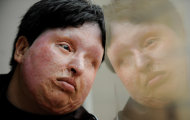
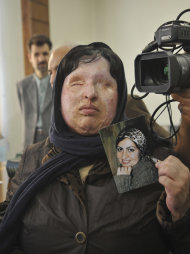
The man waited on his knees and wept.
"I forgave him, I forgave him," she responded, asking the doctor to spare him at the last minute in a dramatic scene broadcast on Iran's state television.
Bahrami, whose face remains visibly burned, was a glimpse of her former self, wearing a touch of pink gloss on her lips and a loosely wrapped headscarf to the hospital where the sentence was to be carried out. She was helped into the building by two women who held both her hands.
"It is best to pardon when you are in a position of power," Bahrami said, explaining that she did not want revenge.
The sobbing man, Majid Movahedi, said Bahrami was "very generous."
"I couldn't imagine being blinded by acid," Movahedi said, as he wept against a wall.
In the trial of Bahrami's attacker, the court ruling allowed the woman to have a doctor pour a few drops of the corrosive chemical in one of Movahedi's eyes as retribution.
A few months after the November 2008 ruling, Bahrami told a radio station in Spain, where she traveled for treatment of her wounds, that she was happy with the sentence.
"I am not doing this out of revenge, but rather so that the suffering I went through is not repeated," she said in that March 2009 interview.
Though she was blinded in both eyes, she said in the radio interview that the court ruled she was entitled to blind him in only one eye.
After undergoing treatment in Barcelona, Bahrami initially recovered 40 percent of the vision in one eye, but she later lost all her sight.
This is the story of goodness triumphing over the revengeful attitude. Sharia laws were compiled with the intent of serving justice and not revenge or retaliation.
I am glad Qisas, an eye for an eye is not practiced in 50 of the 56 Muslim majority nations, it is rather a practice of control freaks, rather than Muslims. Forgiveness is the most important aspect of Islamic practice and not retaliation.
God's favorite is one who forgives! Glad the victim chose to forgive. I cannot figure how a doctor was willing to disfigure another human? Something seriously flawed in Iran, Saudi and possibly in Pakistan. Though rare, it is primitive.
Qisas (Arabic/Persian) is an Islamic term meaning "retaliation," and follows the principle of an eye for an eye, or lex talionis, first set forth by Hammurabi, and subsequently included in the Old Testament and later legal codes. In the case of murder, it means the right of the heirs of a murder victim to demand execution of the murderer.
O you who believe, equivalence is the law decreed for you when dealing with murder - the free for the free, the slave for the slave, the female for the female. If one is pardoned by the victim's kin, an appreciative response is in order, and an equitable compensation shall be paid. This is an alleviation from your Lord and mercy. Anyone who transgresses beyond this incurs a painful retribution. The Quran also allows aggrieved parties to forfeit the right of qisas as an act of charity or an act of atonement for sins.
Qisas is enforced today in countries which follow Sharia, including Saudi Arabia, Iran and Pakistan. But rarely any one is revenged.
In Dallas Rais Bhuiyan showed remarkalbe goodness of forgiving the man who made an attempt to shoot him to kill after 9/11. Governor Rick Perry seem like a villian here by not listening to the victim.
Mike Ghouse
# ##
http://news.yahoo.com/iranian-blinded-acid-pardons-her-attacker-153631250.html
FILE - In this March 4, 2009 file photo, Ameneh Bahrami, who was blinded and disfigured …
In this picture taken on 2008, Ameneh Bahrami, shows her picture before being blinded …
TEHRAN, Iran (AP) — An Iranian woman blinded and disfigured by a man who threw acid into her face stood above her attacker Sunday in a hospital operating room as a doctor was about to put several drops of acid in one of his eyes in court-ordered retribution.
The man waited on his knees and wept.
"What do you want to do now?" the doctor asked the 34-year-old woman, whose own face was severely disfigured in the 2004 attack.
"I forgave him, I forgave him," she responded, asking the doctor to spare him at the last minute in a dramatic scene broadcast on Iran's state television.
Ameneh Bahrami lost her sight and suffered horrific burns to her face, scalp and body in the attack, carried out by a man who was angered that she refused his marriage proposal.
Bahrami, whose face remains visibly burned, was a glimpse of her former self, wearing a touch of pink gloss on her lips and a loosely wrapped headscarf to the hospital where the sentence was to be carried out. She was helped into the building by two women who held both her hands.
"It is best to pardon when you are in a position of power," Bahrami said, explaining that she did not want revenge.
The sobbing man, Majid Movahedi, said Bahrami was "very generous."
"I couldn't imagine being blinded by acid," Movahedi said, as he wept against a wall.
It is a legal right for victims in Iran to ask for a strict enforcement of Islamic law, under which an attempt is made to reach a settlement with victims or their families. If no agreement is reached, then "qisas," or eye-for-an-eye retribution, is enforced.
Under the Iranian judiciary's policy of qisas, convicted murderers are sentenced to death. In another example of a case where qisas was carried out, authorities amputated the hand of a convicted thief in front of other prisoners in October 2010.
In the trial of Bahrami's attacker, the court ruling allowed the woman to have a doctor pour a few drops of the corrosive chemical in one of Movahedi's eyes as retribution.
A few months after the November 2008 ruling, Bahrami told a radio station in Spain, where she traveled for treatment of her wounds, that she was happy with the sentence.
"I am not doing this out of revenge, but rather so that the suffering I went through is not repeated," she said in that March 2009 interview.
Though she was blinded in both eyes, she said in the radio interview that the court ruled she was entitled to blind him in only one eye.
After undergoing treatment in Barcelona, Bahrami initially recovered 40 percent of the vision in one eye, but she later lost all her sight.
Tehran prosecutor Abbas Jafari Dowlatabadi said Movahedi would remain in jail until a court decides on an alternative punishment, according to Iran's ISNA news agency.
He said her attacker will have to pay financial compensation as Bahrami has requested. In the past, Bahrami has asked for up to $200,000 in compensation from the assailant.
There have been several other acid attacks on women in Iran. Last week, a young woman died after a man poured acid on her face for rejecting his marriage proposal. Her attacker remains at large.
Amnesty International criticized the Iranian law that allows victims of such attacks to deliberately blind the assailants under medical supervision.
In a statement Sunday, the rights group said the practice was a cruel punishment that amounts to torture.
"The Iranian authorities should review the penal code as a matter of urgency to ensure those who cause intentional serious physical harm, like acid attacks, receive an appropriate punishment — but that must never be a penalty which in itself constitutes torture," said Hassiba Hadj Sahraoui, Amnesty's deputy director for the Middle East and North Africa.
Sharia 101
By ENVER MASUD
The definition of justice, according to Dr. Robert D. Crane, founder of the Center for Civilizational Renewal, is respect for human rights, which were formulated six centuries ago by Islamic scholars.
These rights, says Dr. Crane, are: "the right to life and personal integrity (haqq al haya), to family and community existence and cohesion at all levels of human society (haqq al nasi), to equal opportunities in accessing ownership of the means of economic production (haqq al mal), to political freedom for self-determination both within and among nations (haqq al hurriyah), to human dignity (haqq al karama, including freedom of religion and gender equity), and to education, knowledge, and freedom of expression (haqq al ilm)."
Regarding separation of Church and State, according to Imam Feisal Abdul Rauf, author of Islam, a Sacred Law, Islamic jurists recognized this concept centuries before the Europeans, and divided the body of Shariah rules into two categories: religious observances and worldly matters. The first they observed to be beyond the scope of modification. The second, subject to interpretation, cover the following:
1. Criminal Law: This includes crimes such as murder, larceny, fornication, drinking alcohol, libel.
2. Family Law: This . . . covers marriage, divorce, alimony, child custody, inheritance.
3. Transactions: This covers property rights, contracts, rules of sale, hire, gift, loans and debts, deposits, partnerships, and damages.
"One of the most sensible definitions of the purposes of the Shariah," according to Imam Feisal, was given by Ibn al-Qayyim al-Jawziyyah who said:
"The foundation of the Shariah is wisdom and the safeguarding of people's interests in this world and the next. In its entirety it is justice, mercy and wisdom. Every rule which transcends justice to tyranny, mercy to its opposite, the good to the evil, and wisdom to triviality does not belong to the Shariah . . ."
According to Imam Feisal the sources of Shariah are, in order:
1. The Quran - God's Word revealed to Prophet Muhammad.
2. The Sunnah - practice and teachings of the Prophet.
3. Ijma - consensus of those in authority.
4. Qiyas - reason, logic, and opinion based upon analogy.
Imam Feisal describes seven other methods for deriving Islamic laws. These seven, plus ijma and qiyas, are collectively known as ijtihad or interpretation, and/or opinion based upon reason and logic.
Several schools of Shariah have evolved: Shafii, Hanbali, Hanafi, Maliki - the orthodox schools, and Jafari - the Shiite school. The Zaydis and Ibadis also have their own schools.
"Classical international law, reputedly invented by the Spaniards Vittorio and Suarez, borrowed the concept of inalienable human rights from Islamic law," according to Dr. Crane.
Wisely implemented, shariah can better nurture and protect society than does Western law which is subject to the whims of lawmakers.
The Man Behind the Anti-Shariah Movement
NASHVILLE — Tennessee’s latest woes include high unemployment, continuing foreclosures and a battle over collective-bargaining rights for teachers. But when a Republican representative took the Statehouse floor during a recent hearing, he warned of a new threat to his constituents’ way of life: Islamic law.
Islamic Law and American Courts

Fred R. Conrad/The New York Times
David Yerushalmi has quietly led a national movement.
Erik Schelzig/Associated Press
Residents watched in downtown Nashville as state lawmakers discussed an antiterrorism measure.
Readers’ Comments
Readers shared their thoughts on this article.
The representative, a former fighter pilot named Rick Womick, said he had been studying the Koran. He declared that Shariah, the Islamic code that guides Muslim beliefs and actions, is not just an expression of faith but a political and legal system that seeks world domination. “Folks,” Mr. Womick, 53, said with a sudden pause, “this is not what I call ‘Do unto others what you’d have them do unto you.’ ”
Similar warnings are being issued across the country as Republican presidential candidates, elected officials and activists mobilize against what they describe as the menace of Islamic law in the United States.
Since last year, more than two dozen states have considered measures to restrict judges from consulting Shariah, or foreign and religious laws more generally. The statutes have been enacted in three states so far.
Voters in Oklahoma overwhelmingly approved a constitutional amendment last November that bans the use of Islamic law in court. And in June, Tennessee passed an antiterrorism law that, in its original iteration, would have empowered the attorney general to designate Islamic groups suspected of terror activity as “Shariah organizations.”
A confluence of factors has fueled the anti-Shariah movement, most notably the controversy over the proposed Islamic center near ground zero in New York, concerns about homegrown terrorism and the rise of the Tea Party. But the campaign’s air of grass-roots spontaneity, which has been carefully promoted by advocates, shrouds its more deliberate origins.
In fact, it is the product of an orchestrated drive that began five years ago in Crown Heights, Brooklyn, in the office of a little-known lawyer, David Yerushalmi, a 56-year-old Hasidic Jew with a history of controversial statements about race, immigration and Islam. Despite his lack of formal training in Islamic law, Mr. Yerushalmi has come to exercise a striking influence over American public discourse about Shariah.
Working with a cadre of conservative public-policy institutes and former military and intelligence officials, Mr. Yerushalmi has written privately financed reports, filed lawsuits against the government and drafted the model legislation that recently swept through the country — all with the effect of casting Shariah as one of the greatest threats to American freedom since the cold war.
The message has caught on. Among those now echoing Mr. Yerushalmi’s views are prominent Washington figures like R. James Woolsey, a former director of the C.I.A., and the Republican presidential candidates Newt Gingrich and Michele Bachmann, who this month signed a pledge to reject Islamic law, likening it to “totalitarian control.”
Yet, for all its fervor, the movement is arguably directed at a problem more imagined than real. Even its leaders concede that American Muslims are not coalescing en masse to advance Islamic law. Instead, they say, Muslims could eventually gain the kind of foothold seen in Europe, where multicultural policies have allowed for what critics contend is an overaccommodation of Islamic law.
“Before the train gets too far down the tracks, it’s time to put up the block,” said Guy Rodgers, the executive director of ACT for America, one of the leading organizations promoting the legislation drafted by Mr. Yerushalmi.
The more tangible effect of the movement, opponents say, is the spread of an alarmist message about Islam — the same kind of rhetoric that appears to have influenced Anders Behring Breivik, the suspect in the deadly dual attacks in Norway on July 22. The anti-Shariah campaign, they say, appears to be an end in itself, aimed at keeping Muslims on the margins of American life.
“The fact is there is no Shariah takeover in America,” said Salam Al-Marayati, the president of the Muslim Public Affairs Council, one of several Muslim organizations that have begun a counteroffensive. “It’s purely a political wedge to create fear and hysteria.”
Anti-Shariah organizers are pressing ahead with plans to introduce versions of Mr. Yerushalmi’s legislation in half a dozen new states, while reviving measures that were tabled in others.
The legal impact of the movement is unclear. A federal judge blocked the Oklahoma amendment after a representative of the Council on American- Islamic Relations, a Muslim advocacy group, sued the state, claiming the law was an unconstitutional infringement on religious freedom.
The establishment clause of the Constitution forbids the government from favoring one religion over another or improperly entangling itself in religious matters. But many of the statutes are worded neutrally enough that they might withstand constitutional scrutiny while still limiting the way courts handle cases involving Muslims, other religious communities or foreign and international laws.
For Mr. Yerushalmi, the statutes themselves are a secondary concern. “If this thing passed in every state without any friction, it would have not served its purpose,” he said in one of several extensive interviews. “The purpose was heuristic — to get people asking this question, ‘What is Shariah?’ ”
The Road Map
Shariah means “the way to the watering hole.” It is Islam’s road map for living morally and achieving salvation. Drawing on the Koran and the sunnah — the sayings and traditions of the prophet Muhammad — Islamic law reflects what scholars describe as the attempt, over centuries, to translate God’s will into a system of required beliefs and actions.
In the United States, Shariah, like Jewish law, most commonly surfaces in court through divorce and custody proceedings or in commercial litigation. Often these cases involve contracts that failed to be resolved in a religious setting. Shariah can also figure in cases involving foreign laws, for example in tort claims against businesses in Muslim countries. It then falls to the American judge to examine the religious issues at hand before making a ruling based on federal or state law.
The frequency of such cases is unknown. A recent report by the Center for Security Policy, a research institute based in Washington for which Mr. Yerushalmi is general counsel, identified 50 state appellate cases, mostly over the last three decades. The report offers these cases as proof that the United States is vulnerable to the encroachment of Islamic law. But, as many of the cases demonstrate, judges tend to follow guidelines that give primacy to constitutional rights over foreign or religious laws.
The exceptions stand out. Critics most typically cite a New Jersey case last year in which a Moroccan woman sought a restraining order against her husband after he repeatedly assaulted and raped her. The judge denied the request, finding that the defendant lacked criminal intent because he believed that his wife must comply, under Islamic law, with his demand for sex.
The decision was reversed on appeal.
“It’s wrong to just accept that the courts generally get it right, but sometimes get it wrong,” said Stephen M. Gelé, a Louisiana lawyer who represents a nonprofit organization that has promoted Mr. Yerushalmi’s legislation. “There is no reason to make a woman play a legal game of Russian roulette.”
While proponents of the legislation have seized on aspects of Shariah that are unfavorable to women, Mr. Yerushalmi’s focus is broader. His interest in Islamic law began with the Sept. 11 attacks, he said, when he was living in Ma’ale Adumim, a large Jewish settlement in the Israeli-occupied West Bank.
At the time, Mr. Yerushalmi, a native of South Florida, divided his energies between a commercial litigation practice in the United States and a conservative research institute based in Jerusalem, where he worked to promote free-market reform in Israel.
After moving to Brooklyn the following year, Mr. Yerushalmi said he began studying Arabic and Shariah under two Islamic scholars, whom he declined to name. He said his research made clear that militants had not “perverted” Islamic law, but were following an authoritative doctrine that sought global hegemony — a mission, he says, that is shared by Muslims around the world. To illustrate that point, Mr. Yerushalmi cites studies in which large percentages of Muslims overseas say they support Islamic rule.
In interviews, Islamic scholars disputed Mr. Yerushalmi’s claims. Although Islam, like some other faiths, aspires to be the world’s reigning religion, they said, the method for carrying out that goal, or even its relevance in everyday life, remains a far more complex subject than Mr. Yerushalmi suggests.
“Even in Muslim-majority countries, there is a huge debate about what it means to apply Islamic law in the modern world,” said Andrew F. March, an associate professor specializing in Islamic law at Yale University. The deeper flaw in Mr. Yerushalmi’s argument, Mr. March said, is that he characterizes the majority of Muslims who practice some version of Shariah — whether through prayer, charitable giving or other common rituals — as automatic adherents to Islam’s medieval rules of war and political domination.
It is not the first time Mr. Yerushalmi has engaged in polemics. In a 2006 essay, he wrote that “most of the fundamental differences between the races are genetic,” and asked why “people find it so difficult to confront the facts that some races perform better in sports, some better in mathematical problem-solving, some better in language, some better in Western societies and some better in tribal ones?” He has also railed against what he sees as a politically correct culture that avoids open discussion of why “the founding fathers did not give women or black slaves the right to vote.”
On its Web site, the Anti-Defamation League, a prominent Jewish civil rights organization, describes Mr. Yerushalmi as having a record of “anti-Muslim, anti-immigrant and anti-black bigotry.” His legal clients have also drawn notoriety, among them Pamela Geller, an incendiary blogger who helped drive the fight against the Islamic community center and mosque near ground zero.
A stout man who wears antique wire-rimmed glasses and a thick, white-streaked beard, Mr. Yerushalmi has a seemingly inexhaustible appetite for the arguments his work provokes. “It’s an absurdity to claim that I have ever uttered or taken a position on the side of racism or bigotry or misogyny,” he said.
When pressed for evidence that American Muslims endorse the fundamentalist view of Shariah he warns against, Mr. Yerushalmi argues that the problem lies with America’s Muslim institutions and their link to Islamist groups overseas. As a primary example, he and others cite a memorandum that surfaced in the federal prosecution of the Holy Land Foundation for Relief and Development, a Muslim charity based in Texas whose leaders were convicted in 2008 of sending funds to Hamas.
The 1991 document outlined a strategy for the Muslim Brotherhood in the United States that involved “eliminating and destroying the Western civilization from within.” Critics emphasize a page listing 29 Muslim American groups as “our organizations and the organizations of our friends.” Skeptics point out that on the same page, the author wrote, imagine if “they all march according to one plan,” which suggests they were not working in tandem.
Nevertheless, a study by the Abu Dhabi Gallup Center to be released next week found that only a minority of American Muslims say that domestic Islamic groups represent them. It also concludes that American Muslims have as much confidence in the judicial system as members of other faiths and are more likely than the other groups to say that elections in the United States are “honest.”
“There’s a conflation between the idea of Islam being a universalist, proselytizing religion and reducing it to a totalitarian movement,” said Mohammad Fadel, an associate professor specializing in Islamic law at the University of Toronto. “All good propaganda is based on half-truths.”
Reaching Out
The movement took root in January 2006 when Mr. Yerushalmi started the Society of Americans for National Existence, a nonprofit organization that became his vehicle for opposing Shariah. On the group’s Web site, he proposed a law that would make observing Islamic law, which he likened to sedition, a felony punishable by 20 years in prison. He also began raising money to study whether there is a link between “Shariah-adherent behavior” in American mosques and support for violent jihad.
The project, Mapping Shariah, led Mr. Yerushalmi to Frank Gaffney, a hawkish policy analyst and commentator who is the president of the Center for Security Policy in Washington. Well connected in neoconservative circles, Mr. Gaffney has been known to take polarizing positions (he once argued that President Obama might secretly be Muslim). Mr. Gaffney would emerge as Mr. Yerushalmi’s primary link to a network of former and current government officials, security analysts and grass-roots political organizations.
Together, they set out to “engender a national debate about the nature of Shariah and the need to protect our Constitution and country from it,” Mr. Gaffney wrote in an e-mail to The New York Times. The center contributed an unspecified amount to Mr. Yerushalmi’s study, which cost roughly $400,000 and involved surreptitiously sending researchers into 100 mosques. The study, which said that 82 percent of the mosques’ imams recommended texts that promote violence, has drawn sharp rebuke from Muslim leaders, who question its premise and findings.
Mr. Yerushalmi also took aim at the industry of Islamic finance — specifically American banks offering funds that invest only in companies deemed permissible under Shariah, which would exclude, for example, those that deal in alcohol, pork or gambling.
In the spring of 2008, Mr. Gaffney arranged meetings with officials at the Treasury Department, including Robert M. Kimmitt, then the deputy secretary, and Stuart A. Levey, then the under secretary for terrorism and financial intelligence. Mr. Yerushalmi warned them about what he characterized as the lack of transparency and other dangers of Shariah-compliant finance.
In an interview, Mr. Levey said he found Mr. Yerushalmi’s presentation of Shariah “sweeping and, ultimately, unconvincing.”
For Mr. Yerushalmi, the meetings led to a shift in strategy. “If you can’t move policy at the federal level, well, where do you go?” he said. “You go to the states.”
With the advent of the Tea Party, Mr. Yerushalmi saw an opening. In 2009, he and Mr. Gaffney laid the groundwork for a project aimed at state legislatures — the same year that Mr. Yerushalmi received more than $153,000 in consulting fees from Mr. Gaffney’s center, according to a tax form filed by the group.
That summer, Mr. Yerushalmi began writing “American Laws for American Courts,” a model statute that would prevent state judges from considering foreign laws or rulings that violate constitutional rights in the United States. The law was intended to appeal not just to the growing anti-Shariah movement, but also to a broader constituency that had long opposed the influence of foreign laws in the United States.
Mr. Gaffney swiftly drummed up interest in the law, holding conference calls with activists and tapping a network of Tea Party and Christian groups as well as ACT for America, which has 170,000 members and describes itself as “opposed to the authoritarian values of radical Islam.” The group emerged as a “force multiplier,” Mr. Gaffney said, fanning out across the country to promote the law. The American Public Policy Alliance, a nonprofit organization formed that year by a political consultant based in Michigan, began recruiting dozens of lawyers to act as legislative sponsors.
Early versions of the law, which passed in Tennessee and then Louisiana, made no mention of Shariah, which was necessary to pass constitutional muster, Mr. Yerushalmi said. But as the movement spread, state lawmakers began tweaking the legislation to refer to Shariah and other religious laws or systems — including, in one ill-fated proposal in Arizona, “karma.”
By last fall, the anti-Shariah movement had gained new prominence. ACT for America spent $60,000 promoting the Oklahoma initiative, a campaign that included 600,000 robocalls featuring Mr. Woolsey, the former C.I.A. director. Mr. Gingrich called for a federal law banning courts from using Shariah in place of American law, and Sarah Palin warned that if Shariah law “were to be adopted, allowed to govern in our country, it will be the downfall of America.”
Also last fall, Mr. Gaffney’s organization released “Shariah: The Threat to America,” a 172-page report whose lead author was Mr. Yerushalmi and whose signatories included Mr. Woolsey and other former intelligence officials.
Mr. Yerushalmi’s legislation has drawn opposition from the American Civil Liberties Union as well as from Catholic bishops and Jewish groups. Mr. Yerushalmi said he did not believe that court cases involving Jewish or canon law would be affected by the statutes because they are unlikely to involve violations of constitutional rights.
Business lobbyists have also expressed concern about the possible effect of the statutes, as corporations often favor foreign laws in contracts or tort disputes. This is perhaps the only constituency that has had an influence. The three state statutes that have passed — most recently in Arizona — make corporations exempt.
“It is not preferable,” Mr. Yerushalmi said. “Is it an acceptable political compromise? Of course it is.”
Subscribe to:
Posts (Atom)